Best Vortex Pump Types for Optimal Performance and Efficiency?
Vortex pumps are essential tools in various industries. Their unique design allows for effective fluid movement. Choosing the right type significantly impacts performance and efficiency.
With many options available, understanding each kind is vital. Some pumps excel in specific conditions, while others offer versatility. The right vortex pump can reduce operational costs.
These pumps are commonly used in wastewater management and industrial applications. However, not all models perform equally in every situation. Identifying the best fit requires careful consideration and testing. Optimizing performance demands attention to detail and ongoing evaluation.
Types of Vortex Pumps and Their Applications in Various Industries
Vortex pumps are widely used for various industrial applications due to their unique design and capabilities. They excel in handling liquids with suspended solids, making them ideal for wastewater management. According to a recent industry report, vortex pumps can handle up to 50% solids content without a drop in performance. This is critical in environments like sewage treatment plants, where efficiency is vital.
In the mining sector, vortex pumps play a crucial role in slurry transportation. They can manage abrasive materials effectively, boasting an average lifespan of 20% longer than traditional centrifugal pumps. A study noted that using vortex technology can increase operational efficiency by 30%. This statistic encourages more companies to consider vortex options for their systems.
However, operators must understand potential limitations. Vortex pumps may struggle with high viscosity fluids, limiting their application scope. Regular maintenance also demands attention, as wear can reduce efficiency over time. Yet, when used in the right conditions, they remain an essential choice for optimizing performance across multiple industries.
Key Characteristics of Vortex Pumps: Performance Metrics and Efficiency
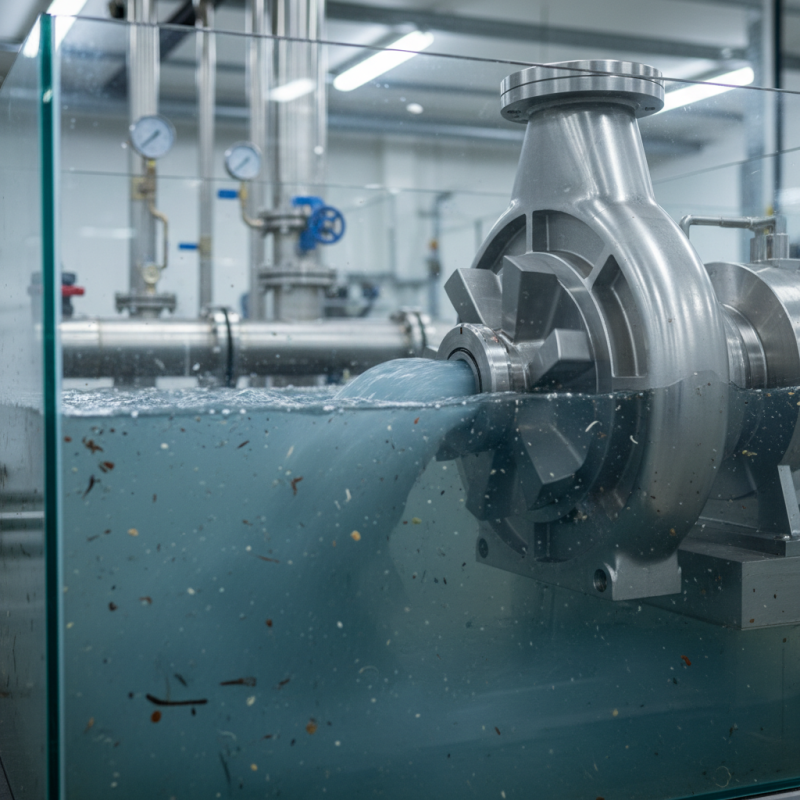
Vortex pumps are notable for their unique design, which contributes to their high efficiency and performance. These pumps create a swirling motion to lift and transport fluids. One key characteristic is their ability to handle solids without clogging. They can efficiently move water mixed with debris or other materials. This capability makes them suitable for various applications, such as waste management and industrial processes.
Another important aspect is energy consumption. Vortex pumps typically consume less energy than traditional pumps. However, their efficiency may vary based on operating conditions. Proper selection is crucial. The size and speed of the pump can greatly affect performance. Some users find that initial trials lead to inefficiencies, highlighting the need for careful analysis.
Durability is also a factor. While vortex pumps are robust, their lifespan can be affected by the type of materials they handle. Regular maintenance is essential to ensure long-term performance. Users often overlook this aspect, leading to more frequent breakdowns. Understanding these metrics helps in making informed choices for optimal operation.
Best Vortex Pump Types for Optimal Performance and Efficiency
Comparative Analysis of Vortex Pumps vs. Centrifugal Pumps Efficiency
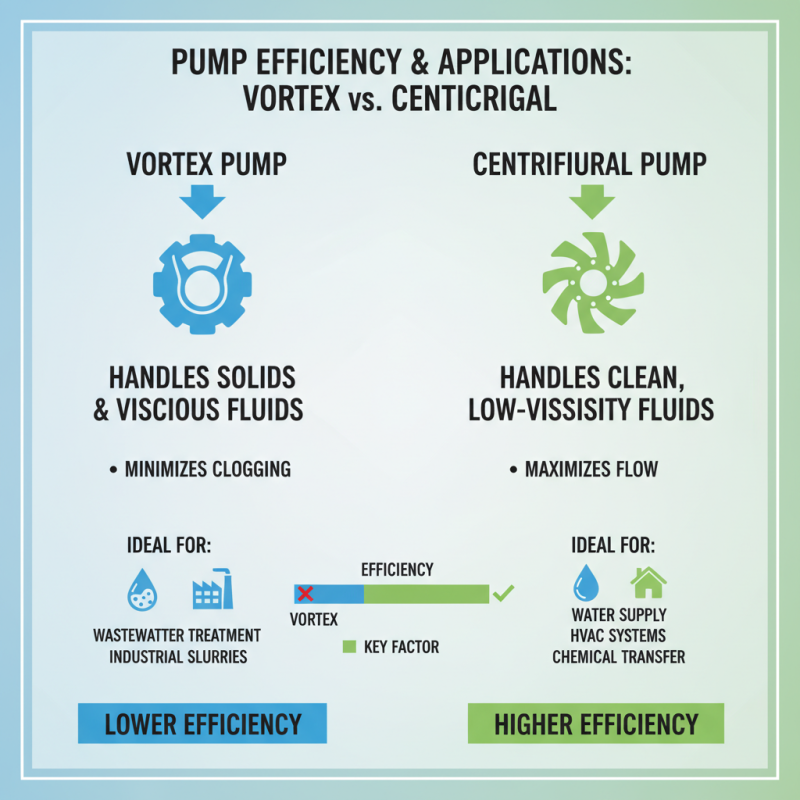
When comparing vortex pumps and centrifugal pumps, efficiency is a crucial factor. Vortex pumps excel in handling liquids with solids and viscous fluids. They have a unique impeller design that minimizes clogging. This makes them ideal for wastewater treatment and industrial applications.
Centrifugal pumps, on the other hand, are widely used for clear, low-viscosity fluids. Their efficiency drops significantly when handling dirty or viscous liquids. The design of a centrifugal pump relies heavily on velocity and pressure. A solid blockage can lead to overheating and pump failure.
**Tips:**
1. If you frequently handle solids, consider a vortex pump.
2. Regular maintenance is key for both types. Replace worn components.
3. Understand the specific needs of your application. This avoids costly mistakes.
Pay attention to the unique requirements of your system. Sometimes, choosing the right pump is not straightforward. Reflect on your needs before making a decision. Evaluate efficiency, maintenance, and performance carefully.
Future Innovations in Vortex Pump Technology and Their Impact on Efficiency
The future of vortex pump technology holds promising innovations that could significantly enhance efficiency. Recent studies indicate that advances in materials and design could lead to up to a 30% increase in energy efficiency. This is crucial for industries relying on fluid transport. By reducing energy consumption, companies can lower operational costs while minimizing environmental impact.
Adding smart technology to vortex pumps could revolutionize performance. Sensors and automation will provide real-time data. This data could optimize flow rates and prevent blockages, improving overall reliability. A recent report highlighted that integrating predictive maintenance could reduce downtime by 15%. However, the challenge remains in the initial costs of these innovations.
Research suggests that not all facilities are ready for this shift. Many lag behind in adopting smart technologies. These facilities could miss out on potential savings and efficiency gains. As the industry evolves, businesses must weigh the costs against long-term benefits. Balancing innovation with practicality is crucial in this ever-changing landscape.