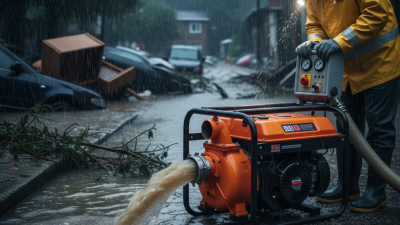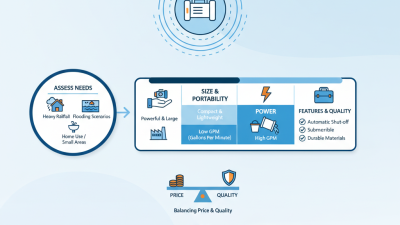
When floods, pipe failures, or power outages strike, an Emergency Water Pump can remove dangerous water quickly. It can protect floors, machinery, electrical areas, and essential access routes. Yet choosing one is not a simple horsepower contest. The right model depends on water depth, debris size, discharge distance, power supply, and operating time. FEMA’s National Preparedness Report emphasizes capability-based planning, while NOAA’s disaster records show that flooding continues to create serious and costly disruptions. These reports clarify the risk, but they cannot choose a pump for your building.
Igor J. Karassik, a respected pump engineer and coauthor of Pump Handbook, offered a useful engineering perspective: “The pump is the heart of the system.” That idea still matters during an emergency. A powerful motor is useless if the intake clogs, the hose collapses, or the generator cannot sustain the load. Small details decide performance. Sometimes, the overlooked hose matters most.
Guidance from NFPA 20, the U.S. Environmental Protection Agency, and emergency-management agencies supports a careful selection process. Buyers should verify flow rate, total head, solids-handling capacity, fuel safety, noise, portability, and maintenance access. Manufacturer test data should be compared with real site conditions, not optimistic labels. No checklist is perfect. I may even overvalue technical specifications when trained operators and clear procedures matter more. This guide explains how to choose an Emergency Water Pump with practical judgment, documented performance, and realistic expectations.
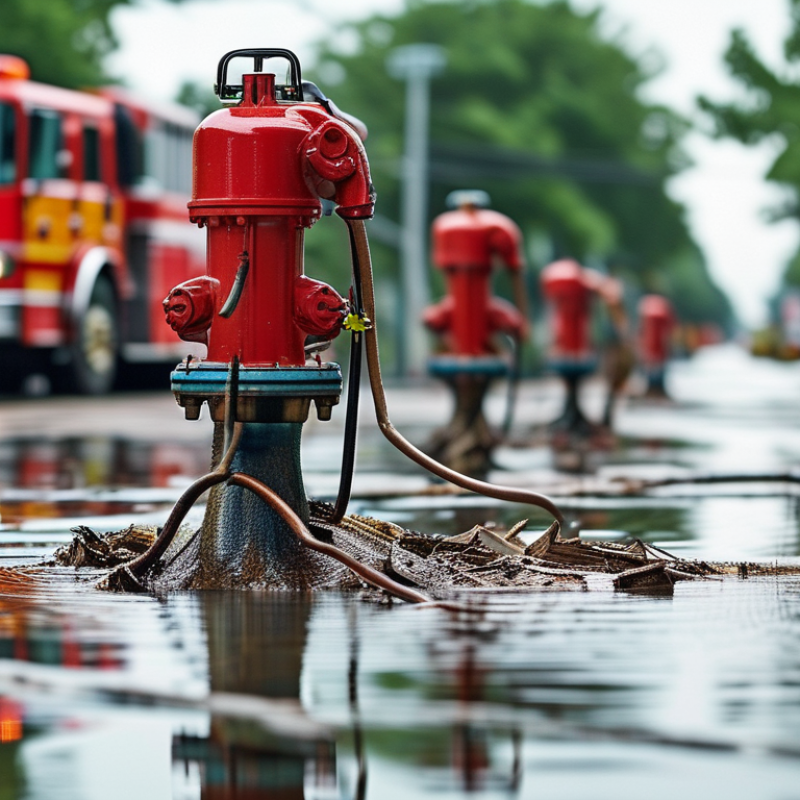
How to Choose an Emergency Water Pump?
Define the emergency water pump’s intended use before comparing specifications. A basement flood needs different equipment from a drained tank or irrigation line. Identify the water source, expected debris, pumping distance, and required response time. Muddy water may contain sand, leaves, or small stones. A narrow impeller can clog quickly. Clean water models are not suitable for every emergency.
Measure the vertical lift from the water surface to the discharge point. Then measure the hose length and bends. Check the pump’s rated flow at that total head, not its impressive free-flow figure. That number can mislead you. For example, a pump advertised at high flow may deliver far less through a long hose. Choose a unit with a strainer, suitable solids handling, and enough runtime for the task. Keep spare fuel, approved cables, or charged batteries nearby.
Power selection also depends on the location. Never place electrical connections in standing water, and follow local electrical requirements. A residual-current safety device may reduce shock risk when correctly installed. For contaminated water, wear suitable gloves, boots, and eye protection, then clean the equipment carefully. I have seen people focus on maximum flow and ignore hose compatibility. That mistake can delay drainage. Test the pump before the emergency, because a silent motor is useless when the water rises.
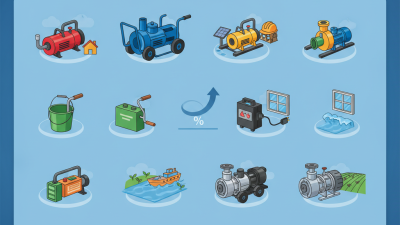
The intended use determines the required pump capacity. These planning examples calculate the average flow rate needed to remove a known water volume within a target time. The figures exclude friction, elevation, hose diameter, and pump efficiency losses, so the selected pump should provide additional capacity after total dynamic head is considered.
For example, removing 5 m³ of water from a basement within 30 minutes requires an average flow of 10 m³/h. Larger outdoor areas and deeper water generally require higher flow rates and more powerful equipment.
Choosing an emergency water pump starts with the water volume, not the pump label. Measure the flooded area and estimate its average depth. A pump rated for 200 liters per minute may deliver much less through a long, narrow hose.
Measure twice. If a basement holds 6,000 liters and must be cleared in two hours, the target is 50 liters per minute before losses. Add extra capacity for bends, connectors, and rising water. A practical margin of 20 to 30 percent can prevent frustrating delays. Real conditions matter. I have seen a powerful pump perform poorly because its outlet hose was too small.
Distance also changes the decision. Calculate vertical lift from the water surface to the discharge point, then consider horizontal hose length. This combined resistance is called total dynamic head. Check the pump curve at your actual head, rather than trusting its maximum flow figure. A pump moving 100 liters per minute at low lift may provide only half that rate uphill.
Use a wider hose when distance increases, and keep it as straight as possible. Confirm whether the water contains mud, leaves, or small debris. Clean water pumps can clog quickly in a flooded garage. Test the setup before an emergency, including power limits, fuel, battery runtime, and hose connections. My own estimates have been wrong when water depth changed during pumping, so leave room to adjust the flow plan.
An emergency water pump is only useful when its power source works during the crisis. Check the pump’s voltage, starting current, and running wattage before buying. A small basement pump may use household electricity, but flooding can cut that supply quickly. A portable generator offers strong output, yet it needs fuel, ventilation, and regular testing. Never operate fuel-burning equipment indoors or near doors and windows.
Battery backup systems provide quieter protection. They can start automatically and keep a pump running during short outages. However, battery capacity depends on pump load, water pressure, and outage length. Read the manufacturer’s runtime data carefully. Real conditions are often less generous. Test the battery every few months, especially before storm season. A simple test can reveal a weak connection or failed charger.
For longer emergencies, combine two power options. A battery can handle the first minutes, while a generator supports extended pumping. Use a properly installed transfer device to prevent dangerous backfeed. A qualified electrician should inspect fixed wiring and grounding. Keep fuel, extension cables, and spare fuses dry and accessible. I once overlooked cable length during planning, and the pump could not reach the safest outlet. That mistake still matters. Store the manual beside the equipment, not in another room.
How to Choose an Emergency Water Pump?
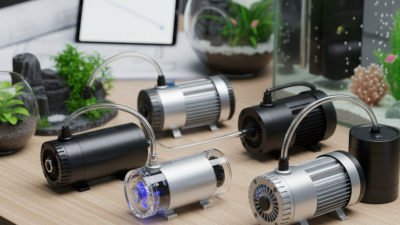
Emergency water needs are growing. The 2023 WHO/UNICEF Joint Monitoring Programme reported that 2.2 billion people lacked safely managed drinking water in 2022. Your pump choice should match the water, not only the advertised flow rate. A submersible pump suits a flooded basement with relatively clear water. A trash pump handles leaves, sand, and small stones. A diaphragm pump may work better with muddy water, but it usually moves less water. Check total head, hose length, and discharge diameter together. A powerful motor cannot compensate for an undersized hose.
Material selection affects service life. Stainless steel resists corrosion, while cast iron tolerates demanding construction use. Thermoplastic housings reduce weight and may suit occasional household deployment. Confirm seal compatibility with saltwater, sediment, and cleaning chemicals. Portability also matters. A 25-kilogram pump is difficult to move across wet stairs. Look for a balanced frame, lifting handle, low fuel consumption, or a battery option. Safety features deserve equal attention. For electric models, use ground-fault protection and outdoor-rated connections. Gasoline engines must operate outdoors because carbon monoxide can accumulate quickly.
Tips: Test the pump before storm season. Measure actual flow with your intended hose. Keep spare couplings and a strainer nearby. The U.S. CDC recommends placing generators at least 20 feet from buildings. That advice is easy to forget. Read the manual, then rehearse the setup. A dry run may expose awkward cables, poor drainage, or a handle that is too small. Some specifications still look impressive on paper, yet fail in dirty water.
| Pump Type | Typical Capacity | Typical Maximum Head | Suitable Water and Application | Materials and Durability | Portability and Power | Important Safety Features |
|---|---|---|---|---|---|---|
|
Electric Submersible Pump Best for flooded rooms and pits |
Approximately 80–300 L/min (21–79 gal/min), depending on motor size and discharge pipe. | Approximately 5–15 m (16–49 ft). | Clear water or lightly contaminated floodwater. The pump is placed directly in the water and can remove water from low-lying areas. | Commonly uses thermoplastic or corrosion-resistant metal housings. A stainless-steel or coated strainer can improve resistance to rust and impact. | Usually compact and easy to carry. Requires a suitable mains supply, generator, or battery system. The electrical connection must remain dry. | Look for thermal overload protection, a grounded or double-insulated design, water-resistant cable connections, a float switch, and residual-current protection. |
|
Electric Transfer Pump Best for tanks and containers |
Approximately 20–150 L/min (5–40 gal/min). | Approximately 5–30 m (16–98 ft), depending on pump design. | Clean water transfer between storage tanks, rain barrels, pools, and temporary containers. It is generally not intended for heavy debris. | Plastic, composite, aluminum, or stainless-steel components are common. Chemical compatibility should be checked when pumping treated or non-potable water. | Generally lightweight and portable. Available with mains, battery, or low-voltage power. Battery models are useful where grid power is unavailable. | Select models with dry-run protection, over-current protection, secure hose fittings, a water-resistant switch, and a clearly rated power cord. |
|
Gasoline-Powered Centrifugal Pump Best where high flow is required |
Approximately 300–1,500 L/min (79–396 gal/min), depending on engine and impeller size. | Approximately 20–35 m (66–115 ft). | Suitable for outdoor flood response, drainage ditches, construction areas, and large-volume water removal. | Cast aluminum or reinforced metal pump bodies are common. A metal frame can protect the engine and pump during transport. | Portable but heavier than electric pumps, often about 20–45 kg (44–99 lb). Requires fuel, ventilation, and outdoor operation. | Never operate indoors, in garages, or near doors and windows because the engine produces carbon monoxide. Check for a fuel shutoff, spark arrestor where required, stable frame, and hot-surface protection. |
|
Gasoline-Powered Trash Pump Best for muddy water and debris |
Approximately 300–2,000 L/min (79–528 gal/min). | Approximately 20–35 m (66–115 ft). | Designed for muddy water, leaves, sand, and small soft debris. The allowable solids diameter must be checked before use. | Reinforced metal housings and abrasion-resistant impellers are common. Replaceable wear components can extend service life when sand is present. | Usually frame-mounted and transportable, but heavy. Requires fuel storage, outdoor ventilation, and regular engine maintenance. | Use only outdoors. Confirm that the pump has a guarded rotating assembly, stable supports, fuel-leak protection, an emergency shutoff, and an accessible clean-out cover. |
|
Manual Diaphragm Pump Best as a no-electricity backup |
Approximately 20–80 L/min (5–21 gal/min), depending on operator effort and suction conditions. | Approximately 5–8 m (16–26 ft). | Useful for shallow drainage, emergency transfer, and locations without fuel or electrical power. Performance decreases with deep suction lift. | Typically made with aluminum, coated steel, durable plastic, and elastomer diaphragms. Diaphragm material should match the water chemistry. | Highly portable and independent of fuel or electricity. Requires continuous manual operation and is slower for large flooded areas. | Check for a stable base, non-slip handle, protected moving joints, secure hose clamps, and a pressure rating suitable for the discharge hose. |
|
Battery-Powered Submersible Pump Best for short outages and quick deployment |
Approximately 30–180 L/min (8–48 gal/min). | Approximately 3–12 m (10–39 ft). | Suitable for light flooding, utility sinks, rainwater tanks, and small basements when mains electricity is unavailable. | Impact-resistant polymer or corrosion-resistant metal housings are common. The battery enclosure should be protected from water and physical damage. | Easy to transport and fast to start. Runtime depends on battery capacity, water head, hose length, temperature, and pump load. | Choose a sealed battery compartment, battery over-temperature protection, low-voltage cutoff, guarded intake, and a visible low-charge indicator. |
Note: The capacity and head figures are typical operating ranges for portable emergency pumps, not guaranteed performance values. Actual output depends on pipe diameter, hose length, elevation, water condition, fittings, power source, and pump configuration. Always follow the operating manual, use a correctly rated hose and power supply, and test the pump before an emergency.
Choosing an emergency water pump means comparing installation needs, maintenance, and total operating cost. Confirm the required flow, discharge pressure, suction lift, and water temperature first. A pump placed above a flood-prone floor may need extra priming protection. Electric models require reliable backup power, while engine-driven models need ventilation, fuel storage, and exhaust planning. Small details matter.
The International Energy Agency reports that electric motor systems consume more than 40% of global electricity. Pump efficiency therefore affects operating costs, even when emergency use is infrequent. The U.S. Department of Energy advises checking system resistance, pipe sizing, control methods, and oversized equipment before purchase. A cheaper pump can become expensive through throttling losses, repeated starts, or poor fuel efficiency. I still see buyers compare purchase prices first. That approach is understandable, but incomplete.
Maintenance should be priced before installation. NFPA 25 requires regular inspection, testing, and maintenance for water-based fire protection equipment, with schedules depending on the equipment and application. Include weekly or monthly testing labor, replacement seals, batteries, filters, fuel, calibration, and access equipment. Keep a written log with test dates and measured pressure. The real cost also includes failure downtime, emergency labor, and water damage. A spreadsheet helps, although it cannot fully predict a failed start at 2 a.m. Evaluate five-year operating cost, not only the invoice.