2026 How to Choose the Right Self Priming Pump for Your Needs?
Selecting the right Self Priming Pump can significantly impact your operations. Industry expert John Smith once stated, "The right pump can save time and money." This insight highlights the importance of making an informed choice.
When considering a self-priming pump, various factors come into play. Understanding the flow rate, pressure requirements, and fluid characteristics is crucial. For instance, think about the specific application. Are you handling clean water or slurry? This choice will guide you in selecting the ideal model.
Additionally, many users overlook maintenance needs. A pump may seem perfect at first glance, but long-term reliability requires regular checks. It’s not enough to choose based solely on initial performance; durability and ease of service are essential. Balancing these elements will lead to a more effective selection process for your Self Priming Pump.
Understanding Self-Priming Pumps: Key Features and Benefits
Self-priming pumps are essential in many applications. They can lift fluids from a lower level without needing to be manually primed. Understanding their features helps in making an informed choice.
Key features include efficiency and ease of use. These pumps can handle various liquids, including dirty water. Their design allows them to create a vacuum, drawing liquid into the pump. However, not all pumps are designed equally. Some may struggle with certain types of fluids.
Tips: Choose a pump with a solid warranty. Look for models specifying maximum lift height. Also, consider the size of the liquid particles the pump can handle.
Another important aspect is maintenance. Regular checks on seals and filters extend pump life. A neglected pump can lead to decreased performance. Reflect on your maintenance schedule and adjust as needed.
Tips: Schedule monthly inspections. Clean the pump and surrounding area. This practice detects potential issues early. Proper maintenance saves money in the long run.
2026 How to Choose the Right Self Priming Pump for Your Needs? - Understanding Self-Priming Pumps: Key Features and Benefits
| Feature |
Description |
Benefits |
| Self-Priming Capability |
Ability to lift water and priming itself without needing manual intervention. |
Convenience and time-saving, ideal for applications where a constant water source is unavailable. |
| Material Construction |
Made from corrosion-resistant materials like stainless steel or thermoplastic. |
Durability and longevity, suitable for various environments. |
| Flow Rate |
Amount of fluid that can be moved per unit time, typically measured in gallons per minute (GPM). |
Choosing the right flow rate is critical for meeting your specific operational needs. |
| Power Source |
Electric or gasoline-powered options are available. |
Flexibility in choosing a pump based on availability of power sources. |
| Suction Height |
Maximum height from which the pump can draw water. |
Important for applications where water needs to be drawn from deep sources. |
Identifying Your Pumping Needs: Flow Rate and Suction Lift
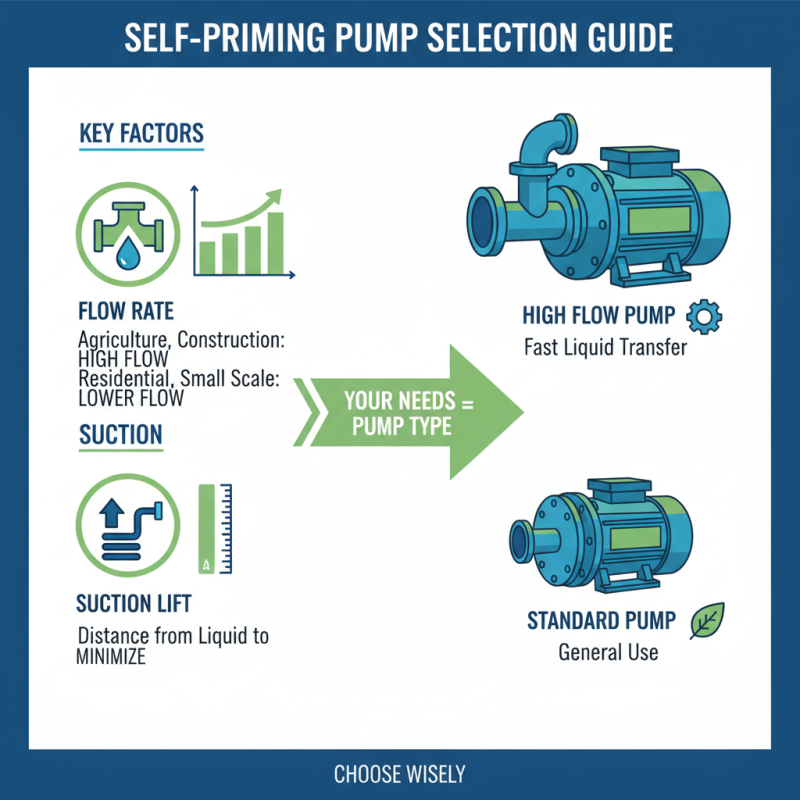
When selecting a self-priming pump, understanding your specific needs is crucial. The flow rate and suction lift are two essential factors. Flow rate measures how quickly a pump can move liquid. Consider your project’s requirements. A high flow rate might be essential in agriculture or construction. However, if the demand is lower, a less powerful pump can suffice.
Suction lift is another important aspect. It defines how deep a pump can draw fluid from a source. A pump with a high suction lift can tap into deeper wells effectively. If your water source is shallow, a pump with a minimal lift could be better. This balance matters, especially in projects with budget constraints.
Evaluating these factors can be tricky. Sometimes, a pump may not meet both flow and lift expectations. It's essential to consider your system's dynamics. You might need to reassess your needs if your chosen pump is underperforming. Small details can make a significant difference. Always factor in future usage scenarios as well.
Maintenance Considerations for Long-lasting Performance
Choosing a self-priming pump is not easy. Maintenance plays a crucial role in ensuring long-lasting performance. Regular checks can prevent minor issues from becoming major problems. A study in the Journal of Hydraulic Engineering indicates that proper maintenance can increase pump efficiency by up to 20%.
When it comes to maintenance, consider inspecting the pump's seals regularly. Worn seals can lead to leaks, affecting performance. Clean the strainer and filter often. Sediment build-up can restrict flow, which is counterproductive. Pay attention to unusual noises. They may indicate impending issues that require immediate action.
Tips: Always keep a maintenance log. Track replacement dates for parts. This practice helps in planning timely replacements. Ensure the pump is properly lubricated; dry components can lead to overheating. Lastly, check the electrical connections; they should be secure and free from corrosion. Ignoring these aspects may lead to costly repairs down the line.
2026 Self-Priming Pump Performance Metrics
Cost vs. Quality: Making an Informed Purchase Decision
When choosing a self-priming pump, many factors come into play.
Cost and quality often dictate purchasing decisions.
Some may go for a cheaper option, thinking they are saving money.
However, an inexpensive pump may lead to higher long-term costs through repairs and replacements.
Quality pumps last longer and perform better, leading to overall savings.
The balance between cost and quality demands careful consideration.
Setting a budget is essential, but do not sacrifice performance.
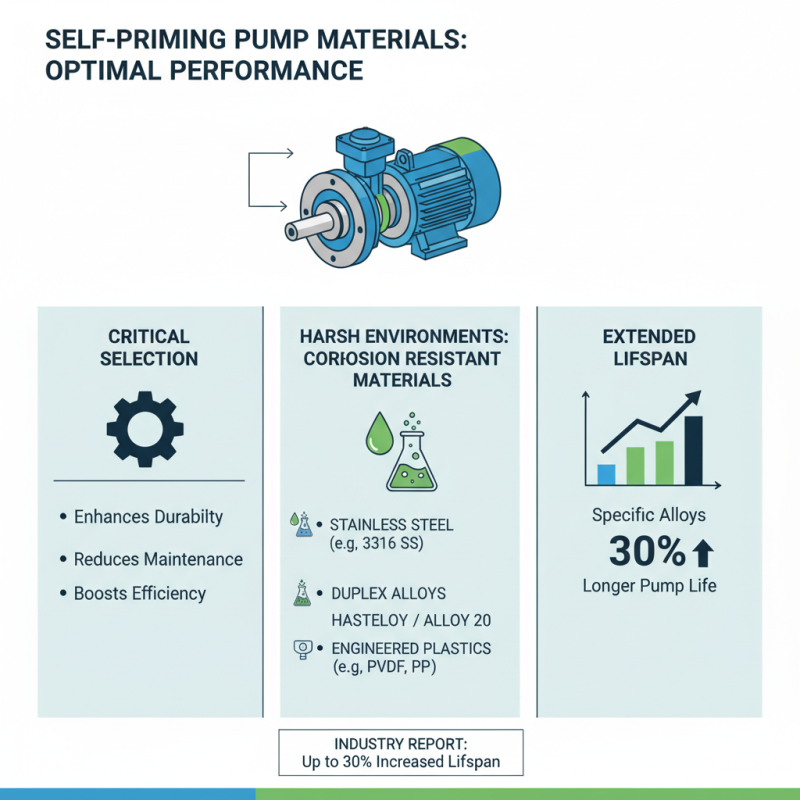
Look for materials that ensure durability, like stainless steel.
It’s worthwhile to research specifications and customer reviews.
Relying solely on price can be risky.
While one pump may seem affordable, its efficiency might fall short, causing operational issues.
Reflection is key here.
A low-cost pump may not meet your needs efficiently.
Sometimes, investing a bit more upfront pays off.
Take the time to evaluate features that matter most for your application.
By understanding your requirements, you make a more informed decision.
While it’s easy to fixate on price, consider the long-term impact of your choice on productivity and reliability.