Top Tips for Choosing Variable Speed Pumps for Your Needs?
Selecting the right Variable Speed Pump for your needs is crucial for efficiency. These pumps adjust their speed to match demand, which saves energy and reduces costs. However, not all Variable Speed Pumps are created equal. You must consider various factors that affect performance and longevity.
Experience plays a vital role in choosing. Many users overlook critical aspects like flow rates and pressure requirements. It's easy to make hasty decisions based on cost, but poor choices can lead to frequent malfunctions. Professionals recommend evaluating your specific application thoroughly.
Additionally, understanding the technical specifications can be daunting. Seek advice from experts or conduct research to ensure informed choices. While it’s tempting to focus solely on price, durability and performance are just as important. Balancing these factors will lead you to a reliable Variable Speed Pump that meets your long-term needs.
Understanding Variable Speed Pumps: An Overview
Variable speed pumps play a vital role in many industries. They adjust their speed based on system requirements. This adaptability leads to energy savings and increased efficiency. Understanding their components is crucial for effective selection.
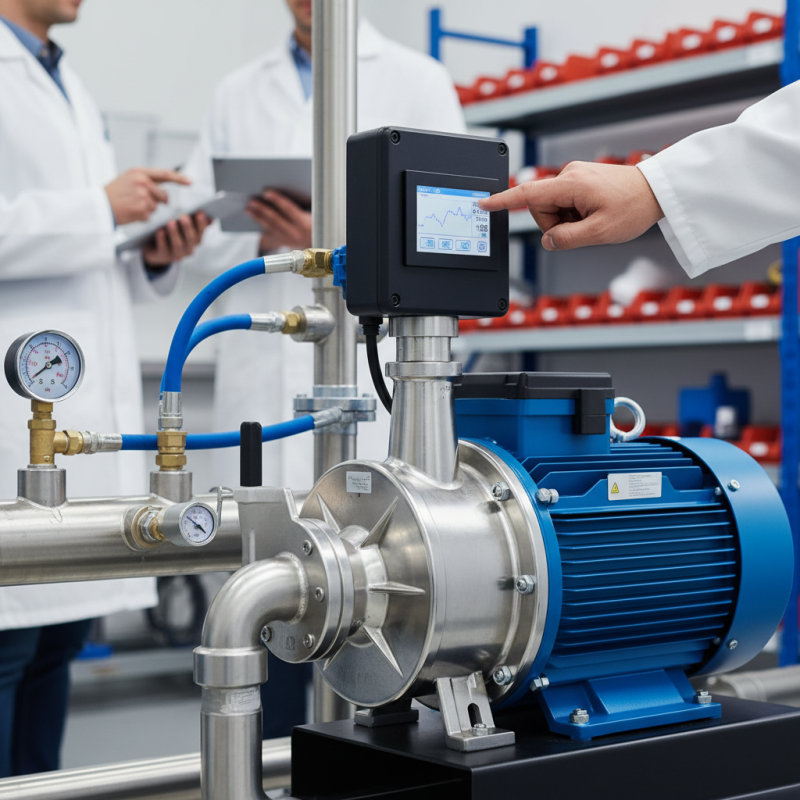
Typically, variable speed pumps include a motor, controller, and pump. The motor power can change according to demand. This control helps maintain desired flow rates, reducing wear on equipment. Users should consider the specific application when choosing a pump.
It's essential to evaluate factors such as environment and system compatibility. Regular maintenance is necessary to ensure long-term reliability. Ignoring this can lead to unexpected costs. Balancing performance and energy use can be challenging yet rewarding. Understanding the fundamentals can guide you in making informed decisions.
Key Factors to Consider When Selecting a Variable Speed Pump
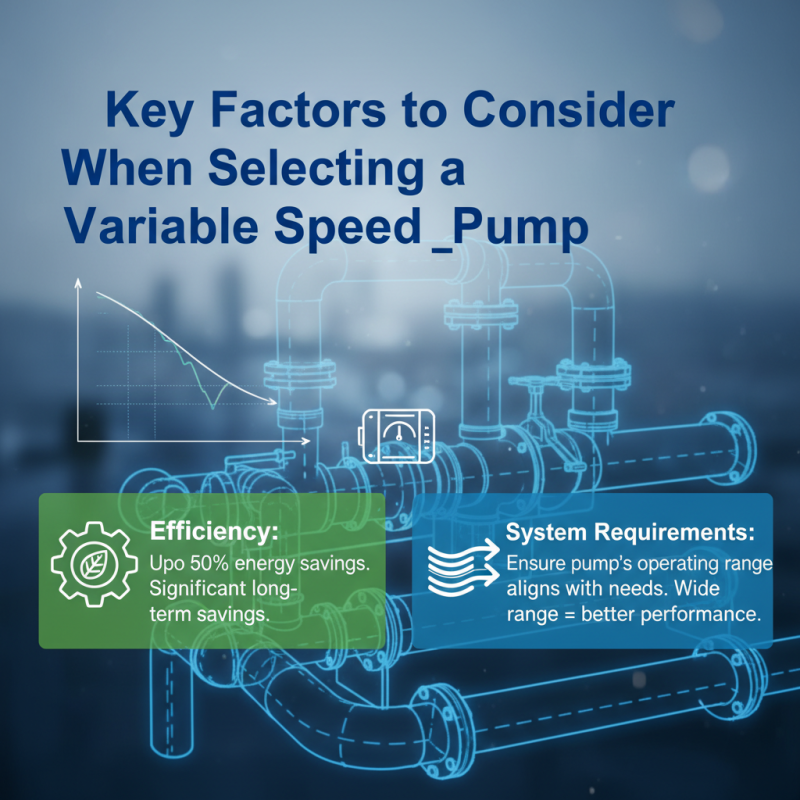
When selecting variable speed pumps, understanding your specific needs is crucial. Efficiency is often a primary concern. According to the Hydraulic Institute, these pumps can improve energy efficiency by up to 50%. This reduction can lead to significant savings over time. Ensure the pump’s operating range aligns with your system requirements. Wide range capabilities often yield better performance.
Another important factor is the type of fluid being pumped. Some applications may require pumps that handle corrosive materials or varying viscosities. Research in the pump industry shows that selecting the right materials can extend pump life and reduce maintenance costs. It’s vital to evaluate the compatibility of components to avoid failures and unscheduled downtimes.
Consider the control systems available. Advanced features, such as integration with automation systems, can enhance operational efficiency. Data from the American Society of Mechanical Engineers (ASME) indicates that pumps with intelligent controls can reduce operational costs significantly. However, choosing overly complex systems can lead to unnecessary complications. Simplifying user interfaces while maintaining functionality is sometimes overlooked in many installations.
Assessing Your Operational Requirements for Efficient Pump Performance
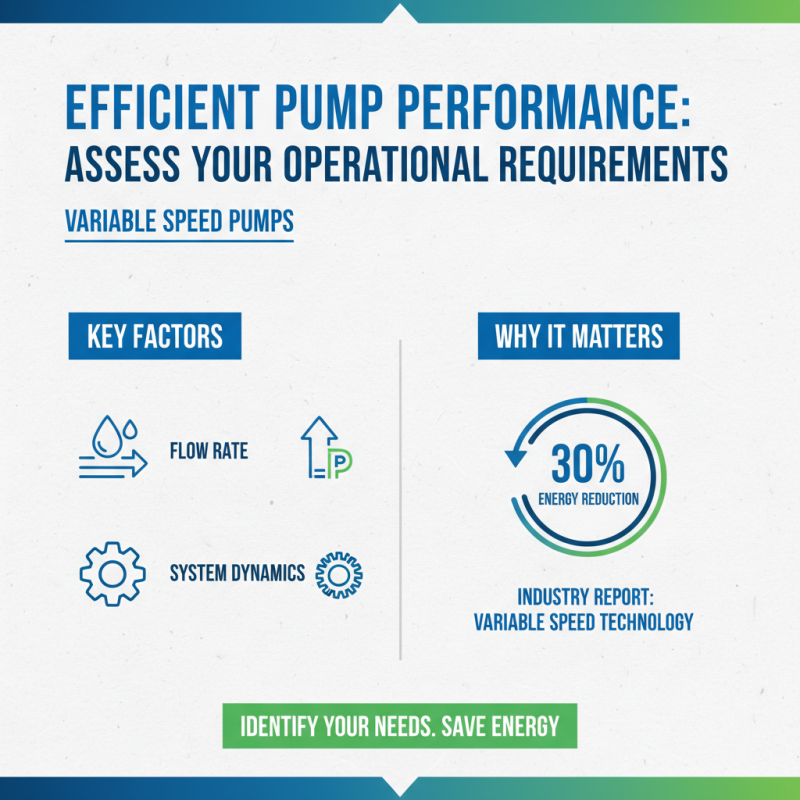
Choosing the right variable speed pump requires a clear understanding of your operational requirements. Efficient pump performance hinges on specific factors including flow rate, pressure, and system dynamics. A well-known industry report indicates that energy consumption can be reduced by 30% when using variable speed technology. Identifying your needs can lead you to better energy savings.
Consider your application’s unique demands. For instance, in agricultural irrigation, varying flow rates might be necessary depending on crop growth stages. The American Society of Agricultural and Biological Engineers highlights that mismatched pumps can lead to a 20% drop in efficiency. Understand your peak and low demand periods to select a pump that can adjust accordingly.
It's also vital to analyze the system's overall design. An inappropriate pump can create excess wear and tear. According to a study by the Hydraulic Institute, nearly 50% of pump failures result from misapplication. Assess factors like pipe diameter and elevation changes. These can significantly affect performance. Taking the time to evaluate these details can result in a more reliable and efficient pumping system.
Comparing Energy Efficiency and Cost Savings of Variable Speed Pumps
When considering variable speed pumps, energy efficiency is a crucial factor. These pumps adjust their speed based on demand, which significantly reduces energy consumption. By operating at lower speeds during off-peak hours, they can save up to 50% on electricity costs. This is particularly beneficial for large systems that run continuously.
However, upfront costs can be a concern. Variable speed pumps often come with a higher price tag compared to traditional models. It's essential to evaluate if the long-term savings outweigh the initial investment. Perform a cost-benefit analysis tailored to your specific needs. Look at your typical usage patterns. Sometimes, the savings may take years to realize.
Additionally, maintenance is a factor often overlooked. While variable speed pumps are generally more reliable, they may still require specialized servicing. Consider your ability to handle unexpected repairs. Not all maintenance teams are trained in the nuances of these advanced systems. Thorough research and planning are necessary to ensure you make a responsible choice. Reflect on your unique situation and don't rush the process.
Top Tips for Choosing Variable Speed Pumps for Your Needs
| Pump Type |
Power Consumption (kW) |
Efficiency (%) |
Cost ($) |
Estimated Annual Savings ($) |
| Single-phase Centrifugal Pump |
1.5 |
85 |
300 |
50 |
| Three-phase Centrifugal Pump |
3.0 |
90 |
800 |
120 |
| Submersible Pump |
2.0 |
88 |
500 |
80 |
| Variable Speed Pump |
2.5 |
95 |
700 |
150 |
| Diaphragm Pump |
1.0 |
82 |
250 |
45 |
Maintenance Tips for Prolonging the Life of Variable Speed Pumps
When it comes to maintaining variable speed pumps, regular upkeep is essential. Start with routine inspections. Look for any signs of wear or unusual noises. Addressing small issues early can prevent costly repairs later. Regularly check the alignment and functionality of electrical connections. Ensure that all components are securely fastened.
Another critical aspect of maintenance is monitoring performance metrics. Keeping track of flow rates and pressure can help identify problems early. If the performance dips, it may indicate a need for servicing. Cleaning the pump regularly is also vital. Build-up from debris can lead to inefficiencies. Make sure to follow the manufacturer's recommendations for cleaning methods.
Consider the environment where the pump operates. Factors like temperature and humidity can affect its lifespan. Damp or corrosive settings can lead to quicker deterioration. Ensure proper ventilation and protection against external elements. Reflect on your maintenance strategies regularly. Are you doing enough to prolong the life of your equipment? Small changes can make a significant difference.