China’s smart pump industry has developed quickly, serving water treatment, building services, agriculture, manufacturing, and energy projects. For global buyers, the challenge is not finding suppliers. It is identifying manufacturers with dependable engineering, transparent documentation, and practical export experience.
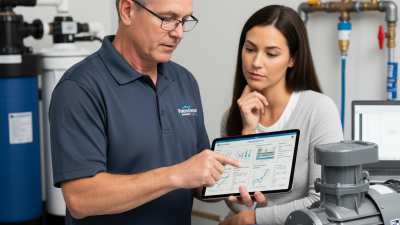
This guide introduces China’s top 10 Smart Pump manufacturers through a buyer-focused lens. The comparison considers product range, motor efficiency, variable-frequency control, remote monitoring, materials, testing procedures, and after-sales support. A capable pump should do more than display data. It should maintain stable pressure, respond to changing demand, and operate reliably in real working conditions. Picture a booster system adjusting flow during a morning demand peak, while its control panel records performance clearly.
Details matter.
Buyers should also examine factory capabilities, quality certifications, warranty terms, spare-part availability, and communication during commissioning. Product samples, technical drawings, test reports, and reference projects can reveal more than polished marketing language. Some manufacturers may have strong hardware but limited overseas service networks. Others may offer advanced software while lacking customization experience. That difference can affect installation time and long-term operating costs.
This list is a practical starting point, not an absolute verdict. Supplier information changes, and performance depends on correct sizing, installation, water conditions, and maintenance. We encourage readers to verify specifications directly and request evidence before placing an order. With careful comparison, international buyers can select a Chinese Smart Pump partner that fits their application, budget, compliance needs, and future expansion plans.
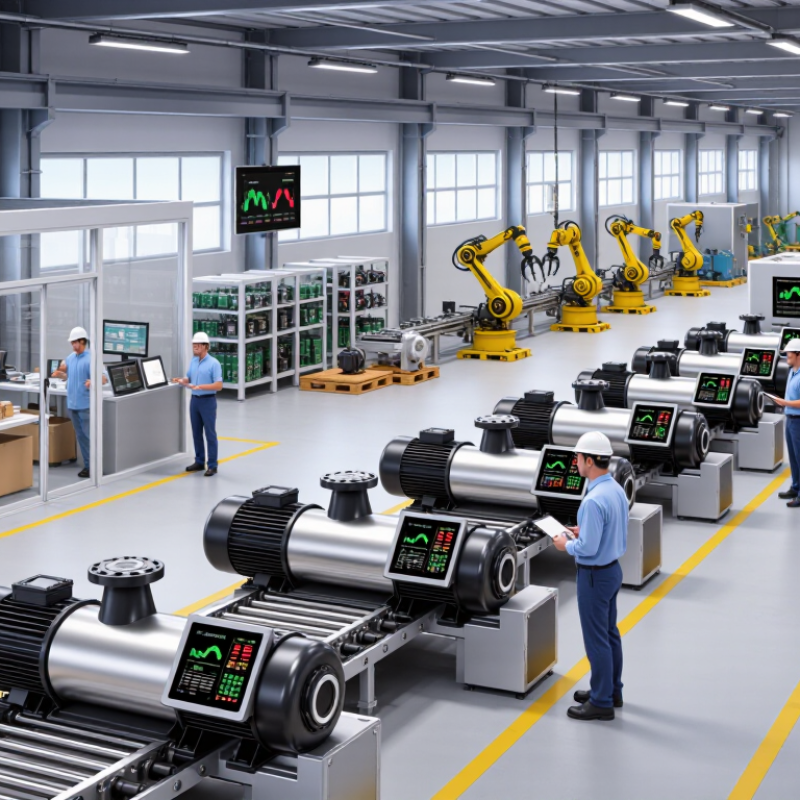
China’s smart pump industry is moving from basic automation toward connected, condition-based operation. MarketsandMarkets reported that the global smart pumps market could grow from about USD 6.6 billion in 2023 to USD 10.7 billion by 2028, with a compound annual growth rate near 10%. China contributes through large water, chemical, building-services, and manufacturing projects.
The market is practical.
A modern Chinese smart pump system may combine a variable-frequency drive, pressure sensors, vibration monitoring, and cloud-based alerts. In a factory, operators can compare discharge pressure with motor current from a control room. This helps identify blockage, dry running, or seal wear before an unplanned shutdown. The International Energy Agency notes that efficient motor systems can reduce industrial electricity use substantially, making pump control a direct energy issue.
Market boundaries remain unclear. Some reports count only intelligent pump units; others include software and remote monitoring. This makes direct comparisons imperfect. A buyer should check test conditions, sensor accuracy, communication protocols, and service response. China’s growing municipal water investment also supports demand, while retrofit projects often face old pipes, unstable power, and incomplete operating records. These details can weaken digital performance.
Reliability still matters more than dashboards. Manufacturers with strong testing procedures, documented efficiency curves, cybersecurity controls, and local maintenance teams are better positioned for global projects. Data from the U.S. Department of Energy also shows that pump-system efficiency depends on the entire system, not only the pump.
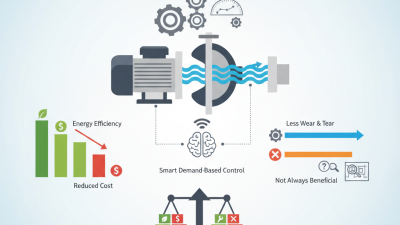
When global buyers assess smart pump manufacturers, the product brochure is only a starting point. Ask for test records covering flow stability, pressure accuracy, energy use, and remote alarm performance. A serious supplier should explain sensor tolerances and calibration intervals in plain language. Request a sample data report, not polished promises.
Factory experience matters. Inspect production lines, incoming-component checks, software testing, and final water-pressure trials. Photos can mislead; a live video audit or independent inspection gives stronger evidence. Procurement teams should compare more than purchase price. Calculate installation labor, spare sensors, firmware support, training, and expected downtime over several years.
Tips: Create a weighted scorecard before contacting suppliers. Give quality, service response, documentation, and lifecycle cost clear scores. Request two customer references from similar water conditions. Verify claims with operating records where possible. Do not ignore small details. A missing manual today can become an expensive delay tomorrow.
Check whether communication protocols fit your existing control system. Ask how the manufacturer handles cybersecurity updates, data ownership, and access permissions. These questions reveal practical maturity. Still, no evaluation is perfect. Technically impressive pumps can fail when local technicians cannot obtain replacement parts quickly. That weakness deserves a written response, not an optimistic estimate. Pilot testing helps, but site results may vary. Keep that limitation visible during negotiations.
China’s leading smart pump manufacturers combine large-scale production with practical engineering. Their core strengths include sensor integration, variable-frequency drives, remote monitoring, and application-specific customization. These features help pumps adjust flow when demand changes, instead of running continuously at full speed.
The U.S. Department of Energy reports that optimized pumping systems can reduce energy use by 20% to 50%.
That figure explains the growing interest in intelligent controls across factories, buildings, and water facilities. Chinese manufacturers also support rapid prototyping and flexible production. Many can adapt materials, motor ratings, communication protocols, and enclosure protection for export projects. However, product catalogs may look stronger than field performance. Independent testing still matters.
Industry research from MarketsandMarkets identifies energy efficiency, predictive maintenance, and connected monitoring as major smart pump market drivers. In practice, the best suppliers provide more than software dashboards. They offer stable calibration, spare-part availability, commissioning support, and clear failure alarms. Look for evidence from documented projects, laboratory test results, and service response times.
Remote monitoring sounds impressive. Poor data quality makes it nearly useless.
When comparing China’s leading smart pump manufacturers, buyers should examine technology beyond product brochures. Modern systems commonly combine variable-frequency drives, pressure sensors, flow meters, and programmable controllers. Remote monitoring may use Modbus, Ethernet, or secure wireless gateways. These features support stable water pressure and lower energy consumption. However, connectivity quality differs between models.
Certifications deserve careful checking. Reliable suppliers usually maintain ISO 9001 quality systems and provide CE documentation for applicable markets. Some products may also meet RoHS, EMC, or regional electrical safety requirements. Certification must match the exact model, voltage, and destination. A certificate for one controller does not automatically cover a complete pump system. This detail is often overlooked.
Export capability depends on more than shipping experience. Strong manufacturers provide bilingual manuals, wiring diagrams, spare-parts lists, and inspection records. They should explain factory acceptance testing, packaging protection, and after-sales response times. Buyers should request performance curves at defined flow rates and head pressures. Ask for real test data. A supplier may describe smart control confidently, yet offer limited integration support after delivery. That weakness deserves attention before signing a contract. Trial orders, video inspections, and independent technical reviews can reduce uncertainty without replacing professional due diligence.
China Top 10 Smart Pump Manufacturers for Global Buyers
Supplier Comparison Criteria for International Buyers
International buyers should compare smart pump suppliers through measurable evidence, not polished catalog images. Check factory experience, engineering qualifications, and documented export projects. Ask for test reports showing flow rate, pressure stability, energy use, and noise levels. A reliable supplier should explain testing conditions clearly. Vague numbers deserve caution.
Control technology matters in real installations. Review sensor accuracy, remote monitoring functions, alarm settings, and communication protocols. Confirm whether the pump supports the buyer’s voltage, frequency, pipe size, and local automation system. Request a sample interface or live demonstration. Small details matter. A confusing dashboard can increase maintenance errors.
After-sales support often separates capable suppliers from weak ones. Compare response times, spare-parts availability, warranty terms, installation guidance, and technician training. Ask how service cases are tracked across different time zones. Certifications should match the destination market and product type, rather than simply appearing on a document list. Buyers should also examine packaging, corrosion protection, lead times, and quality-control records.
Price is only one comparison point. A cheaper pump may consume more electricity or require frequent repairs. Yet, premium claims can also be overstated. I have found that supplier interviews sometimes reveal gaps between sales promises and factory practice. Independent inspection, reference checks, and a small pilot order can reduce that risk. Do not skip the uncomfortable questions.
| Rank | Anonymized Supplier | Manufacturing Region | Primary Smart Pump Categories | Typical Flow Range | Typical Head / Pressure Range | Motor and Control Technology | Common Materials | Quality and Compliance Evidence | Customization Capability | Export Readiness | After-Sales Support | Buyer Evaluation Score |
|---|---|---|---|---|---|---|---|---|---|---|---|---|
| 1 | Supplier A | East China | Variable-speed booster systems, HVAC circulation pumps, water-transfer pumps | 0.5–1,000 m³/h | Up to 160 m | Permanent-magnet or induction motor; integrated variable-frequency drive; pressure and flow sensors | Cast iron, stainless steel 304/316, engineering plastics | ISO 9001 quality system; CE documentation available for applicable models; performance testing records | High: control panels, voltage, flange standards, communication protocols and pump curves | Strong export packaging, English manuals, multilingual technical documentation | Remote commissioning and spare-parts support | 9.1 / 10 |
| 2 | Supplier B | Central China | Industrial process pumps, smart end-suction pumps, water-supply skids | 2–800 m³/h | Up to 150 m | IE3/IE4 motor options; variable-frequency control; dry-run and overload protection | Cast iron, ductile iron, stainless steel and duplex options | ISO 9001 records; factory acceptance testing; material certificates available by order | High: motor ratings, impeller trim, seals, coatings and connection dimensions | Experience with containerized shipments and export inspection requirements | Application engineering and commissioning assistance | 8.9 / 10 |
| 3 | Supplier C | South China | Submersible drainage pumps, sewage pumps, smart dewatering systems | 5–2,000 m³/h | Up to 100 m | Moisture sensors, thermal protection, level-control compatibility and remote alarm outputs | Cast iron, stainless steel, hardened alloys for selected wear parts | ISO 9001 quality procedures; insulation and pressure test reports for applicable products | Medium to high: cable length, seal arrangement, impeller type and control cabinet | Suitable for municipal, construction and mining export projects | Spare wear parts and troubleshooting documentation | 8.7 / 10 |
| 4 | Supplier D | East China | Commercial building booster sets, domestic-water pumps, pressure-control packages | 1–600 m³/h | Up to 200 m | Multi-pump sequencing, constant-pressure control, touchscreen controller and remote monitoring options | Stainless steel 304/316, cast iron and composite components | ISO 9001 system; hydraulic test reports; compliance files supplied according to destination market | High: skid layout, pump quantity, pressure setpoint, enclosure and communication interface | Strong documentation for building-services projects and international tenders | Start-up guidance and controller parameter support | 8.6 / 10 |
| 5 | Supplier E | North China | Oil-transfer pumps, chemical-process pumps, magnetic-drive pumps | 0.3–500 m³/h | Up to 120 m | Variable-speed drives, leak detection, bearing-temperature monitoring and remote fault signals | Stainless steel, fluoropolymer-lined parts, alloy steel and corrosion-resistant plastics | ISO 9001 procedures; pressure testing; material and seal documentation available for project orders | High: wetted materials, seal design, motor protection and hazardous-area requirements | Suitable for industrial export projects requiring detailed technical submittals | Process selection support and maintenance instructions | 8.5 / 10 |
| 6 | Supplier F | Southwest China | Agricultural irrigation pumps, solar-compatible pumping systems, remote water pumps | 2–1,200 m³/h | Up to 180 m | Variable-frequency drive, soft start, dry-run protection and optional solar-input control | Cast iron, stainless steel and reinforced polymer components | ISO 9001 quality controls; routine performance testing; electrical documentation for applicable models | Medium: pump sizing, motor voltage, controller configuration and inlet/outlet dimensions | Practical experience with rural, agricultural and off-grid applications | Remote diagnostics with standard spare-parts lists | 8.3 / 10 |
| 7 | Supplier G | East China | Fire-pump packages, jockey pumps, pressure-maintenance systems | 5–1,500 m³/h | Up to 250 m | Automatic start control, pressure transducers, duty/standby sequencing and alarm interfaces | Cast iron, ductile iron, stainless steel and coated steel | ISO 9001 system; hydraulic and electrical test records; destination-country approval must be confirmed | Medium to high: package arrangement, controller, engine or motor configuration and accessories | Export-capable packing and project documentation; local approval remains buyer responsibility | Commissioning checklist and technical file support | 8.2 / 10 |
| 8 | Supplier H | Central China | Solar water pumps, deep-well pumps, compact smart pumping units | 0.5–300 m³/h | Up to 350 m | Sensorless or sensor-based control, MPPT solar controller options and low-water protection | Stainless steel, cast iron and corrosion-resistant polymer components | ISO 9001 procedures; electrical safety and routine performance records available by model | Medium: solar input, cable length, control logic, motor rating and well dimensions | Suitable for container and parcel export; technical verification is recommended for remote sites | Installation manuals and remote parameter guidance | 8.0 / 10 |
| 9 | Supplier I | South China | Pool and recreational-water pumps, filtration pumps, compact circulation pumps | 3–250 m³/h | Up to 60 m | Variable-speed options, timer control, overload protection and energy-saving operating modes | Thermoplastics, stainless steel, cast iron and ceramic mechanical-seal components | ISO 9001 quality practices; electrical and hydraulic test reports for standard product lines | Medium: voltage, frequency, fittings, seals, color and private-label packaging | Well suited to distributor orders and standard international container shipments | Product training and replacement-part support | 7.8 / 10 |
| 10 | Supplier J | North China | Mining slurry pumps, abrasive-service pumps, heavy-duty dewatering pumps | 10–3,000 m³/h | Up to 120 m | Motor protection, vibration monitoring options, variable-speed control and remote fault outputs | High-chrome alloys, rubber-lined parts, cast iron and stainless steel | ISO 9001 procedures; wear-part testing; material and hydraulic reports available for project orders | High: liner material, impeller design, discharge arrangement, drive system and wear protection | Experienced with heavy cargo, project packing and spare-wear-part shipments | Wear-life guidance and field maintenance support | 7.7 / 10 |